Phone:
+91-98710 38442
Physical address:
Ground Floor, Centrum Plaza, Mehrauli-Gurgaon Rd, next to CRC Building, Sultanpur, New Delhi, Delhi 110030

Phone:
+91-98710 38442
Physical address:
Ground Floor, Centrum Plaza, Mehrauli-Gurgaon Rd, next to CRC Building, Sultanpur, New Delhi, Delhi 110030
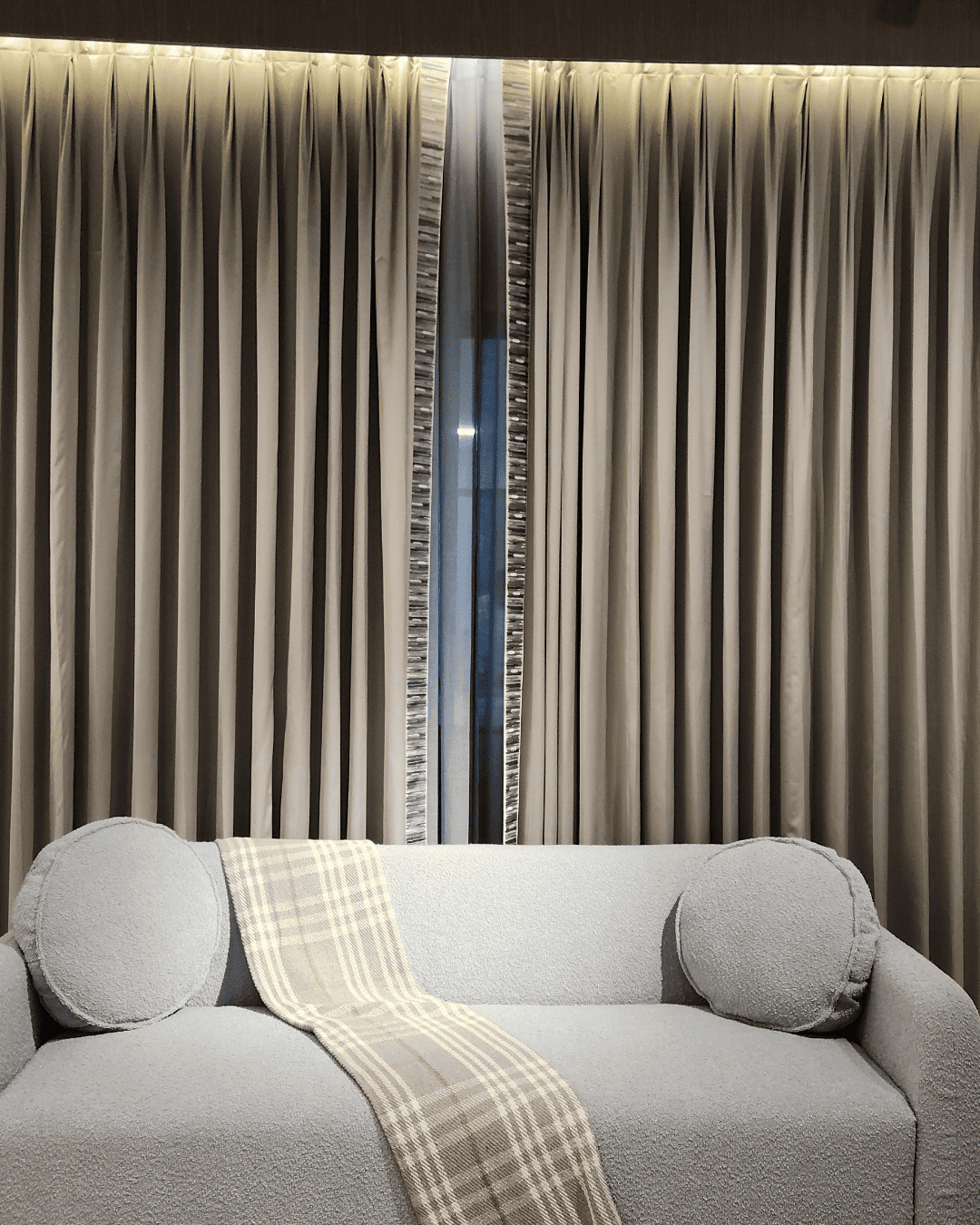
Most people pick curtains the way they pick a wall colour based on how it looks in the showroom. But curtains live a harder life than most home décor. They filter sun for eight hours a day, trap dust, absorb monsoon moisture, and get washed (or not washed) far less often than they should. Choosing the fabric first, and the pattern second, is what actually determines whether your curtains still look good in three years. Here's how we think about it after years of fitting curtains across homes in the city.
A west-facing window gets brutal afternoon sun for a good chunk of the year, and that heat and UV exposure will fade a cheap fabric within a couple of seasons. For these windows, a tighter weave cotton-linen blends or polyester blends with UV-resistant treatment holds colour far longer than loosely woven sheers. North-facing rooms, which get softer, more consistent light, can get away with lighter, more delicate fabrics since they're not fighting direct sun all day.
Sheers do more than let light in they diffuse harsh sun and add softness to a room without blocking the view entirely, which works well in living rooms where you still want some connection to outside. Blackout linings, on the other hand, are less about aesthetics and more about function: bedrooms, home theatres, or any room facing early morning sun benefits from a proper blackout layer. A lot of homes end up going with a double-layer setup sheer against the glass, a heavier drape or blackout lining behind it which gives control over both light and privacy independently.
This is a genuinely Delhi-specific consideration. Fabrics with a tight, smooth weave like a good polyester-cotton blend collect noticeably less dust and are far easier to shake out or vacuum than heavily textured fabrics like velvet or boucle. Velvet looks luxurious, but in a high-dust environment it needs more maintenance than most people are prepared to give it. If you love the look of velvet, save it for a room with lower air exchange, like a formal dining room, rather than a window that's opened daily.
Natural fibres like pure linen and silk are beautiful but can develop a musty smell or slight mildew in humid months if a room doesn't get good airflow. Synthetic blends and treated cottons are far more forgiving here, and they're what we generally recommend for ground floor apartments or homes near green belts, where humidity tends to linger longer after the rains.
A lightweight fabric on a tall window can look thin and slightly cheap no matter how nice the print is, while the same print in a slightly heavier GSM (grams per square metre) fabric drapes with real body and looks intentional. As a rough guide, taller windows and formal rooms benefit from a heavier drape, while smaller windows and casual spaces can use lighter fabric without losing impact.
• Cotton-linen blends — breathable, holds structure well, good middle-ground for most rooms
• Polyester blends — budget-friendly, fade-resistant, low maintenance, ideal for sun facing windows
• Faux silk — gets the sheen and drape of silk without the humidity sensitivity
• Jacquard weaves — textured pattern woven into the fabric itself rather than printed, so the pattern doesn't fade unevenly
Fabric choice is one of those decisions that's expensive to get wrong twice, which is why we spend time at the consultation stage actually looking at the window's orientation, the room's use, and the client's maintenance habits before recommending anything. We've fitted curtains in homes right across the city from compact flats near Ghitorni to larger villas around DLF Phase 1 and DLF Phase 2 and the fabric conversation genuinely changes depending on the specific light and layout of the space, which is part of why we prefer an in home visit over a catalogue pick. If you're weighing up options for a home anywhere in Gurgaon or the surrounding pockets, it's worth getting an actual sample held up against your window before committing fabric reads very differently under a showroom light than it does against your own walls.
Book a free consultation with SILKARA and we'll help you match fabric to your space, not just your Pinterest board.