Phone:
+91-98710 38442
Physical address:
Ground Floor, Centrum Plaza, Mehrauli-Gurgaon Rd, next to CRC Building, Sultanpur, New Delhi, Delhi 110030

Phone:
+91-98710 38442
Physical address:
Ground Floor, Centrum Plaza, Mehrauli-Gurgaon Rd, next to CRC Building, Sultanpur, New Delhi, Delhi 110030
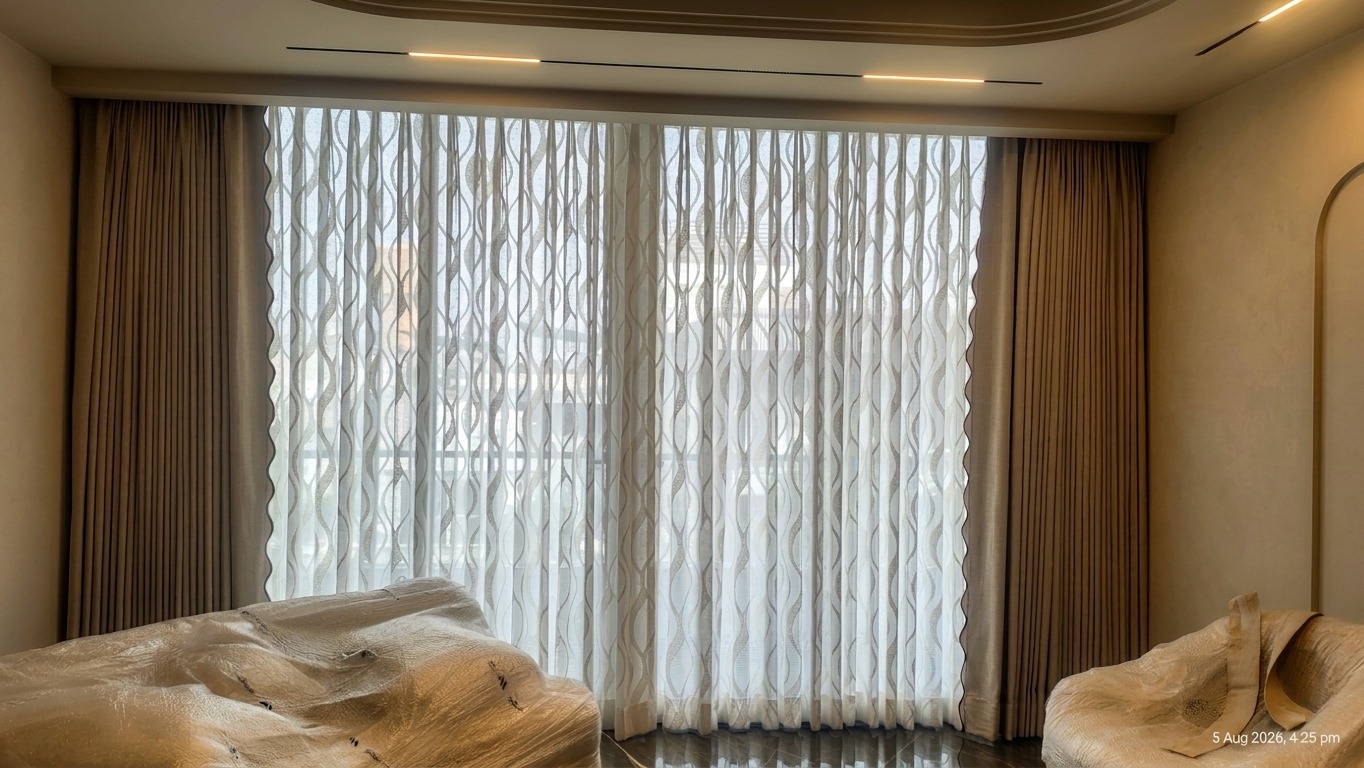
Curtain fabric mistakes rarely announce themselves the way a bad paint colour does. Nobody walks into a room and immediately says "that fabric is wrong" instead, something just feels slightly off, a little unfinished or cheap, without an obvious explanation. More often than not, the culprit is the curtain fabric itself, chosen for the print or the price rather than how it actually behaves on that specific window. After years of fitting curtains across homes in DLF Phase 1, DLF Phase 2, DLF Phase 4, and Sushant Lok 1, a handful of the same fabric mistakes come up again and again. Here's what to watch for.
A lightweight fabric on a tall window almost always looks thin and slightly flimsy, no matter how attractive the print is on its own. Taller windows need fabric with enough weight and body to hold a proper drape and fall in clean folds rather than looking flat against the glass. This is one of the most common issues we see corrected during a reupholstery or curtain refresh the print was right, the weight was wrong.
Curtains aren't static decoration; they open and close daily, and fabric that's too stiff or too heavy for its rod and mechanism ends up dragging, bunching, or wearing out the track faster than expected. Testing how a fabric sample folds and moves, not just how it looks pinned flat, avoids this problem before it becomes an installation headache.
Fabric sheen matte, satin, or slightly glossy needs to stay reasonably consistent across a room's soft furnishings, or the space starts to feel visually disjointed. A high-sheen curtain fabric paired with entirely matte upholstery and rugs can make a room feel like it was decorated in two unrelated sittings, even when each individual piece looks fine on its own.
Lining isn't just about blocking light. Unlined curtains fade faster, hang with less structure, and let far more outside noise and heat through than most people expect. In a city with as much dust and sun exposure as Gurgaon, skipping lining to save a small amount upfront usually costs more in fabric replacement within a couple of years.
A beautiful textured fabric that needs professional dry cleaning every few months sounds fine in the store, but most households don't actually keep up with that level of care once life gets busy. Being honest about how much maintenance a household will realistically commit to should factor into fabric choice as much as appearance does a slightly less dramatic fabric that's actually easy to maintain wins out in the long run.
Most curtain fabric regrets trace back to a decision made from a swatch book or a showroom sample, disconnected from the actual window, light, and household routine it needs to work with. We walk clients across DLF 1, DLF 2, DLF 4, and Sushant Lok 1 through fabric weight, sheen, and lining decisions on-site specifically to avoid these issues before stitching begins, rather than fixing them after installation.
Book a free consultation with SILKARA and we'll flag any mismatch before it becomes a costly mistake.